
Language is constantly changing: new words appear, familiar expressions acquire additional meanings, and some words gradually fall out of use. To document these changes, lexicographers work with texts, historical sources and examples of language in actual use. This is how the Oxford English Dictionary (OED) is compiled – a historical dictionary that documents the development of the English language.
The process begins with searching for examples of how people use words. Lexicographers examine a variety of sources, from books and newspapers to digital materials. The words themselves are not the only important element; the context in which they appear also matters. This makes it possible to trace when a particular word or meaning was recorded in available sources.
Examples of usage help us understand how a word functions in different periods. Lexicographers check sources, date quotations and select those that best illustrate the use of a word. These quotations provide the documentary evidence on which a historical dictionary is based: they show how a word was used at a particular time, rather than simply explaining its meaning.
The meaning of a word can change, broaden or acquire a figurative sense. Sometimes, a familiar word begins to be used in a new context; in other cases, a single word has several meanings that developed during different periods. By comparing examples from different sources, lexicographers determine which meanings should be described separately and how they are related.
Once the material has been examined, editors develop the structure of the entry. It may include definitions, pronunciation, spelling variants, information about the word’s origin and examples of its use. Quotations help substantiate and illustrate the meanings described. The completed entry is checked and edited before it becomes part of the dictionary.
From Paper Slips to Digital Sources
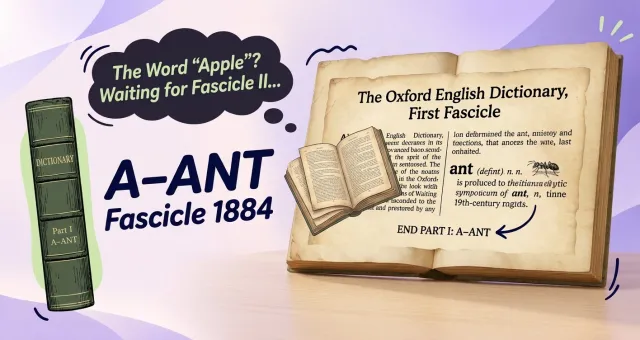
The history of the OED demonstrates the scale of this work. During the preparation of the early editions, examples of words were recorded on small paper cards known as dictionary slips. They were organised by word so that editors could use the collected quotations when preparing dictionary entries. The Oxford University Press Archives preserves more than five million such slips associated with the first edition of the dictionary.
Today, lexicographers also work with digital resources, but the fundamental principle remains unchanged: descriptions of language must be based on evidence of its actual use.
Why Does This Matter?
The Oxford English Dictionary does more than explain what English words mean. It documents how they have been used and how they have changed over time. Thanks to the work of lexicographers, the dictionary helps researchers, teachers and everyone interested in the English language better understand its history.
The journey of a single word into a dictionary entry may involve searching sources, checking quotations, analysing meanings and editorial work. As a result, individual examples from texts become a documented history of a word and part of the history of the English language.