Grammar becomes easier to understand when students see how it works in real communication. Instead of starting a lesson with rules and gap-fill exercises, teachers can introduce a short text in which a particular grammatical structure helps convey an idea, describe an event, or explain a situation. This approach helps students not only learn grammatical forms but also understand why they are used and how to apply them in their own speaking and writing.
From Reading to Understanding Grammar
In an educational blog post for Oxford University Press, Nigel A. Caplan recommends focusing on the meaning of a text first and then rereading it to pay attention to its language features. This helps students see grammar in context rather than as a set of isolated rules.
How can teachers apply this principle in the classroom?
1. Start with the Meaning
Choose a short text appropriate to your students’ level, such as a blog post, dialogue, story, or news article. First, ask students to identify the main idea and answer a few comprehension questions.
2. Encourage Students to Notice Grammatical Patterns
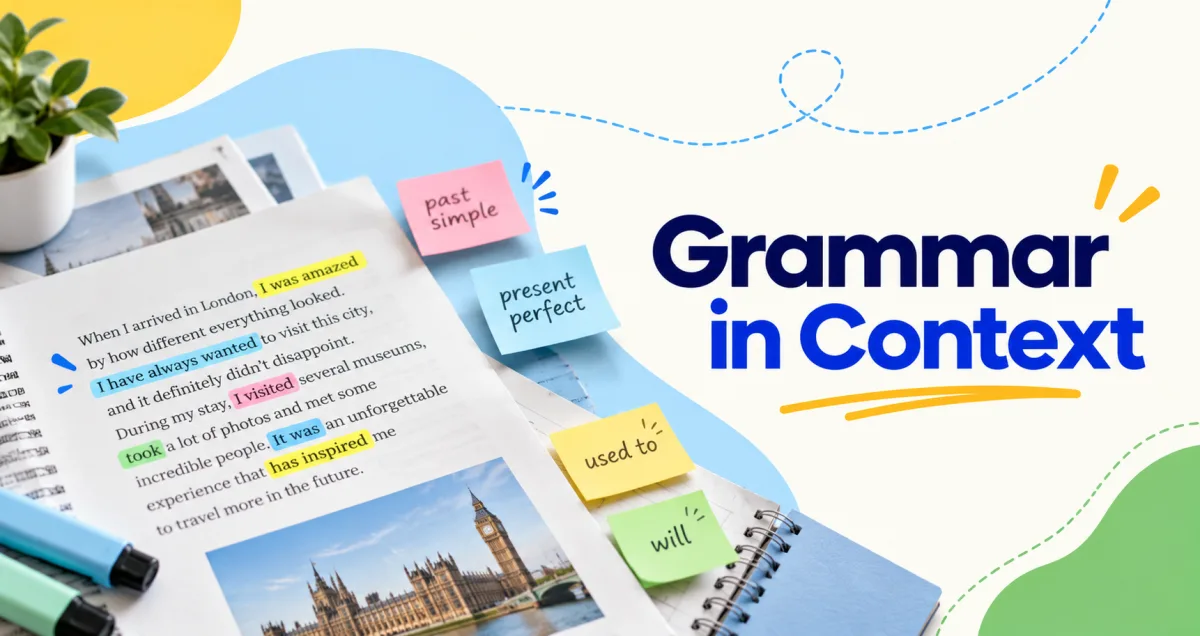
Ask students to underline the structures you are studying and compare examples. For instance, if the lesson focuses on the Present Perfect and Past Simple, students can find sentences containing both tenses and identify the information each one conveys.
3. Discuss the Function of Grammatical Structures
Instead of simply asking, “Which tense is this?”, encourage students to think about why the author chose that particular form. Does it describe a completed event in the past? Is the person’s experience important, or is its connection to the present relevant?
4. Move on to Students’ Own Examples
After analysing the text, ask students to write a few sentences about their own experiences or produce a short paragraph using the structures they have studied. This helps them move from recognising grammar to using it independently.
A Practical Classroom Example
Topic: Present Perfect and Past Simple
Ask students to read the following short text:
I have always wanted to visit Spain. Last summer, I travelled to Barcelona with my family. We visited the Sagrada Família and tried traditional Spanish food. It was an unforgettable trip!
After reading, ask students to identify the verbs and compare how they are used.
• I have always wanted – describes a desire that has existed up to the present.
• I travelled, we visited, we tried – describes specific completed events in the past.
Next, ask students to write a short text about a country they have visited or would like to visit. For additional practice, students who have travelled can describe a specific trip, while those who have not yet had the opportunity can write about their travel dreams and plans, using the appropriate grammatical structures.
How to Make This Approach Effective
Choose texts with a clear learning objective. There is no need to analyse every grammatical structure at once. Focus on one or two features that align with the lesson objectives.
Let students discover patterns for themselves. Present examples and guiding questions before summarising the rule. This approach helps develop students’ language awareness.
Show how meaning changes. Ask students to compare two sentences or rewrite a passage using a different grammatical structure. Discuss how the change affects the meaning.
Revisit the target language through writing. After working with a text, ask students to create their own dialogue, blog post, or short story. This helps you assess whether they can apply the structures independently.
Grammar That Supports Communication
Teaching grammar through texts helps connect form, meaning, and real language use. Reading becomes not only a way to understand information but also an opportunity to notice language patterns, analyse the author’s choices, and improve students’ own writing.
A practical tip for teachers: The next time you work with a text, do not rush straight into grammar exercises. First, give students time to understand the content.
Then ask them to identify one interesting grammatical structure, explain its function, and use it in a sentence of their own.